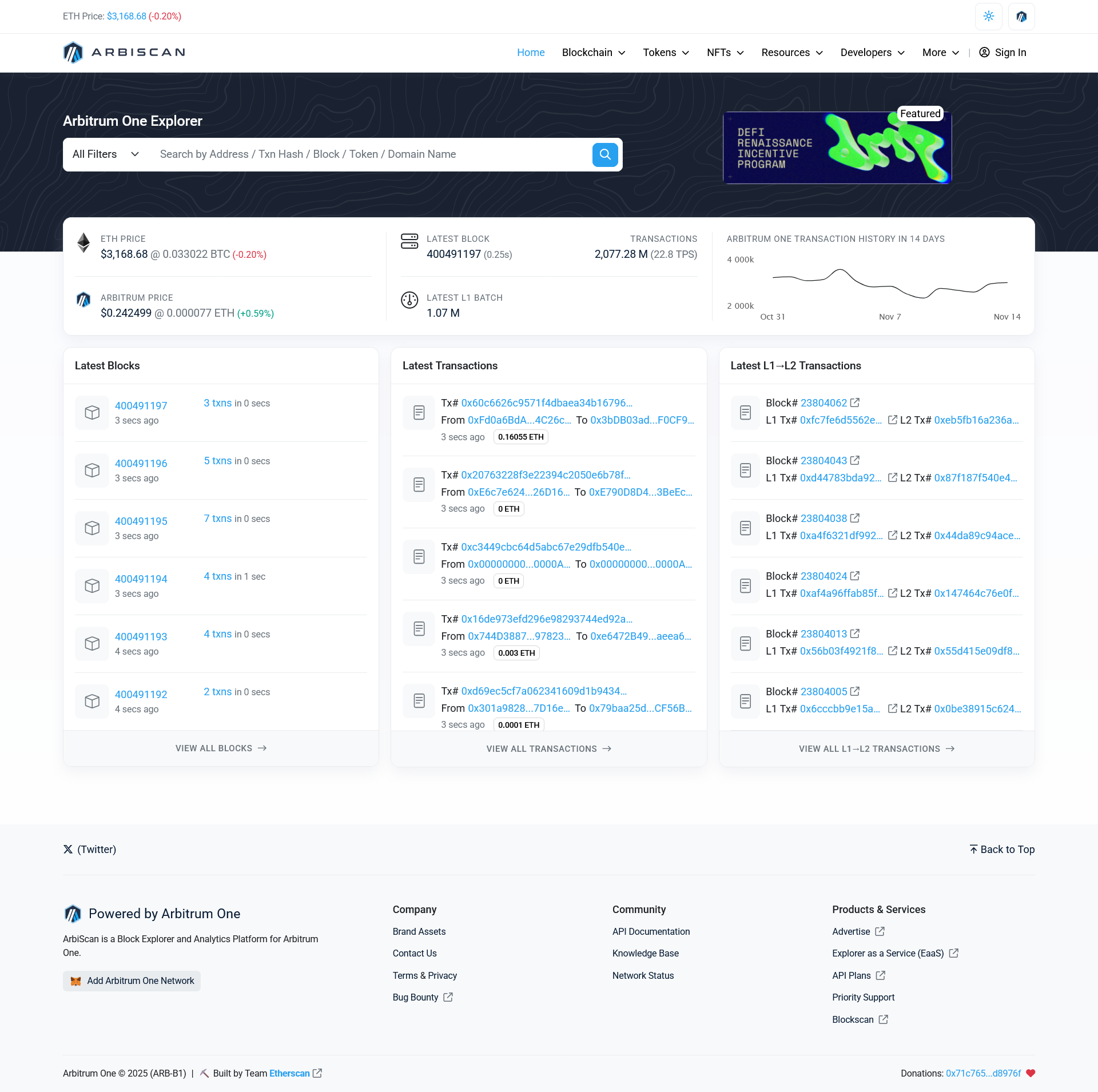
Arbiscan: The Gateway to Ethereum’s Layer 2 Ecosystem
In the rapidly expanding world of decentralized finance (DeFi), blockchain networks are continuously evolving to address issues such as scalability, transaction speed, and high fees. Ethereum, as the largest smart contract platform, has faced challenges with its high gas fees and network congestion, particularly during times of high demand. This is where Layer 2 solutions like Arbitrum come in. Arbiscan, the blockchain explorer for Arbitrum, plays a crucial role in helping users navigate and interact with this Layer 2 solution.
What is Arbitrum?
Before diving into Arbiscan, it's important to understand the Layer 2 solution it supports: Arbitrum. Arbitrum is a scaling solution built on top of Ethereum, designed to increase throughput while reducing costs. It leverages Optimistic Rollups, a technology that processes transactions off-chain and only submits necessary data to the Ethereum mainnet. This allows for faster and cheaper transactions while still benefiting from Ethereum’s robust security.
Arbitrum, as a Layer 2 network, provides a solution to Ethereum's scalability problem by handling a majority of the transaction load, with only periodic "rollups" of data sent to Ethereum’s main chain. As a result, users can transact more affordably without sacrificing security or decentralization.
What is Arbiscan?
Arbiscan is the block explorer and analytics platform for the Arbitrum network, similar to how Etherscan works for Ethereum. It allows users to explore and monitor all activity occurring on the Arbitrum blockchain. Whether you’re checking transaction details, exploring blocks, verifying contract addresses, or viewing token information, Arbiscan serves as the window to the Arbitrum ecosystem.
Here’s a breakdown of what Arbiscan offers:
1. Transaction Tracking
One of the primary features of Arbiscan is its ability to track transactions on the Arbitrum network. Similar to Etherscan, users can search for transaction hashes (TX hashes) to see details such as the status (success or failure), gas fees, block confirmations, sender and receiver addresses, and other pertinent transaction data.
2. Address and Wallet Exploration
Users can search for any Ethereum address that has interacted with the Arbitrum network. By entering an address, users can see the transaction history, token balances, and smart contract interactions associated with that address. This is a key feature for those wanting to track their wallets or analyze the activities of other addresses.
3. Block Information
Arbiscan allows users to view information about each block in the Arbitrum blockchain, including block number, timestamp, the list of transactions included in the block, and block size. This information is important for users and developers who want to stay updated on the latest network activity or troubleshoot issues.
4. Token Information
Arbiscan provides a comprehensive list of all ERC-20 tokens deployed on the Arbitrum network. Users can search for any specific token to see its transaction history, market data, and token holders. This is particularly useful for DeFi users who need to track specific token movements across the Arbitrum network.
5. Smart Contract Interaction
Arbiscan also provides tools for interacting with smart contracts deployed on the Arbitrum network. Developers and advanced users can interact directly with smart contracts, call functions, and send transactions to deployed contracts. The platform makes it easy to view and interact with the code and logic of decentralized applications (dApps).
6. Network Analytics
Arbiscan also provides a set of analytical tools that allow users to monitor the overall health and performance of the Arbitrum network. These analytics include metrics such as block times, transaction throughput, gas usage, and total transaction count. These metrics are invaluable for developers, investors, and anyone interested in understanding the health and growth of the Arbitrum ecosystem.
7. Validator Information
Arbitrum uses a system of validators to ensure the correctness of the rollup process. Arbiscan provides details on the active validators in the network, the amount of ETH staked, and the performance of each validator. This feature is essential for those involved in Arbitrum’s governance or staking, as they can monitor validator behavior and make informed decisions.
Why is Arbiscan Important?
1. Transparency and Trustlessness
Arbiscan enhances the transparency of the Arbitrum network by allowing users to publicly inspect transaction data, smart contract code, and network statistics. This trustless approach is crucial for ensuring that all activities on the blockchain are open and verifiable.
2. Security and Auditing
Developers can use Arbiscan to audit smart contracts and review the history of transactions, ensuring that deployed contracts are secure and functioning as intended. This is particularly important in DeFi, where vulnerabilities can lead to significant financial loss. Arbiscan's ability to track contract interactions can help identify any potential issues early on.
3. User Empowerment
Arbiscan empowers users by providing an easy-to-use interface to monitor their assets and activity on the Arbitrum network. This is especially useful for those unfamiliar with blockchain explorers, offering a user-friendly tool to stay updated on their transactions, balances, and the overall performance of the network.
4. Support for Decentralized Applications (dApps)
With its comprehensive exploration tools, Arbiscan is an invaluable resource for developers building on the Arbitrum network. It helps ensure the smooth operation of dApps by allowing developers to monitor transactions, debug issues, and stay on top of smart contract execution.
How Arbiscan Fits into the Broader Ethereum Ecosystem
Arbiscan is a critical piece of the puzzle in Ethereum's broader Layer 2 scaling narrative. Ethereum’s base layer has limitations in terms of scalability, but solutions like Arbitrum are bridging the gap by enabling more efficient and cost-effective transactions. With Arbiscan, users and developers have a powerful tool to track, explore, and interact with the Arbitrum network, ensuring transparency and enhancing trust in the entire ecosystem.
As Ethereum continues to evolve with advancements like Ethereum 2.0 and various Layer 2 solutions, explorers like Arbiscan will only grow in importance. They will continue to serve as essential resources for developers, users, and analysts who need to monitor activity, investigate issues, and interact with blockchain data across these scaling solutions.
Conclusion
Arbiscan is an indispensable tool for anyone involved with the Arbitrum network, providing a user-friendly and comprehensive platform for exploring transactions, smart contracts, and other important blockchain data. By offering transparent access to Arbitrum’s Layer 2 operations, Arbiscan contributes to the broader Ethereum ecosystem’s efforts to scale while maintaining decentralization and security. As Layer 2 solutions like Arbitrum continue to gain traction, Arbiscan will play a pivotal role in ensuring the continued growth and success of this ecosystem.